The yacht check-in, done properly
The handover at the charter base is the half hour that decides who pays for the scratch on the hull. Go through the boat with a list, note what is already broken, and you start the week with a clear conscience. Do it from memory and you sign a form you have not really read. This page is the check-in list we use ourselves - 115 points across seven areas, from the anchor windlass to the spare parts box. Free in Skipper Connect, shared with your crew, tickable on your phone while you stand in the cockpit.
The check-in list your whole crew can see
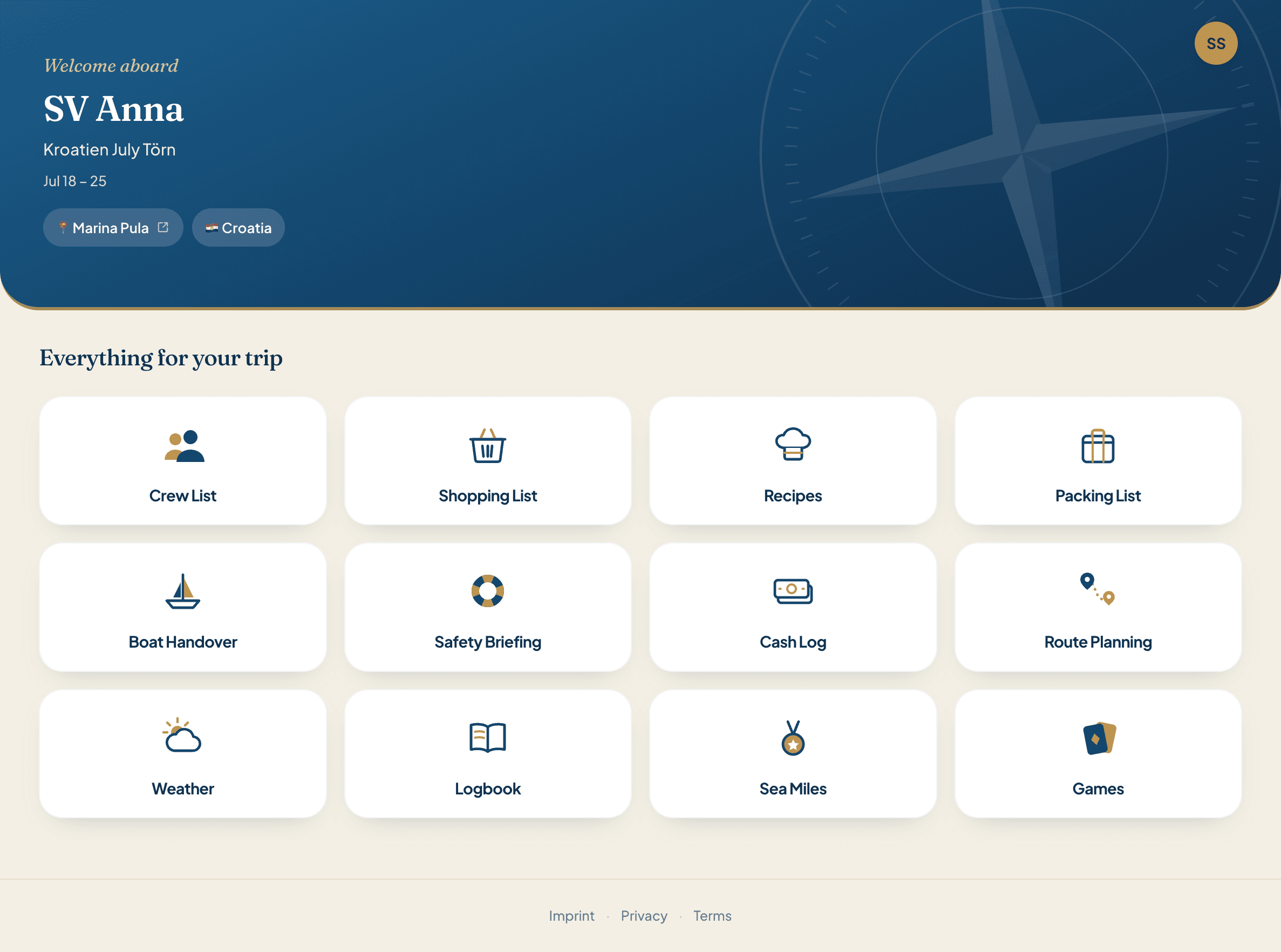
Open the trip, tap Boat Handover, and the 115 points are already there. Tick them off while you stand in the cockpit, add a note where something is broken, and everyone on board sees the same list at the same time.
- 115 points, ready to go. Seven areas, from Above Deck to Miscellaneous. Nothing to type, nothing to print.
- Notes where they belong. A remark sits on the item it describes - “gelcoat crack, photographed” stays attached to Hull, not on a piece of paper in a bag.
- The crew checks together. Everyone in the trip sees the list; the skipper keeps the pen. Two people below deck, two on deck, one list.
- Add your own points. Every area takes extra items. Whatever this particular boat needs, it goes on the list and stays there.
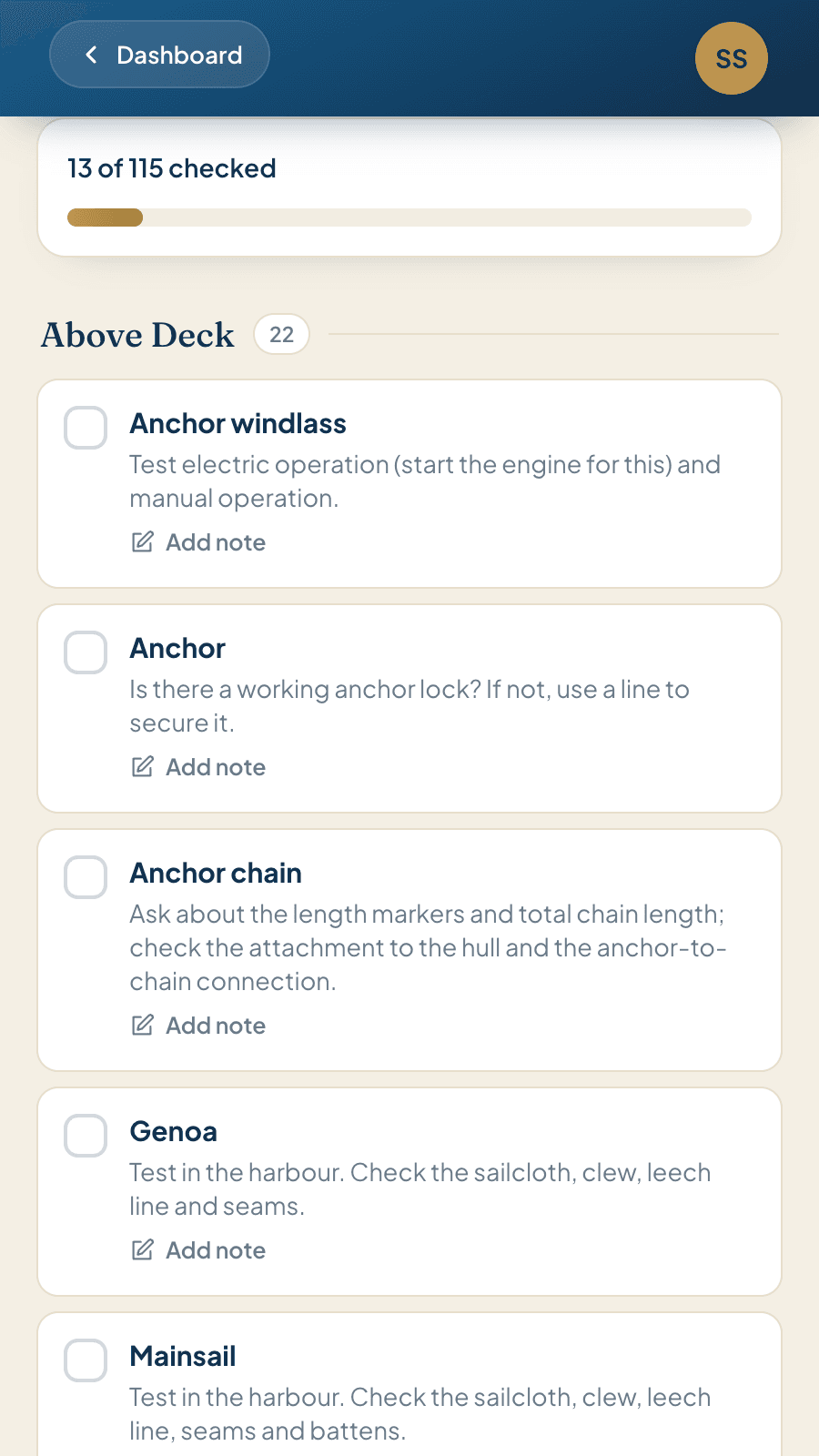
115 points, seven areas
Charter bases hand over in a hurry. The list below follows the boat, not the paperwork - you walk from the bow to the chart table and tick as you go. Three points per area are shown here; the rest live in the app.
All 115 points are already in the app
You do not have to type a single one.
Three mistakes that cost money at check-out
All three happen in the same half hour at the quay, and all three surface again on the day you hand the boat back.
Signing before you have looked
The base hands you a form and a pen while the previous crew is still carrying bags off the boat. Everything not written down at that moment counts as your damage in ten days. Note it, photograph it, and have the form signed by the base - not just by you.
Not knowing where the switches are
Main battery switch, seacocks, engine emergency stop, bilge pump. Nobody looks for these in daylight at the quay; everybody looks for them at two in the morning in a swell. The handover is the only time someone is standing there who can show you.
Letting the clock do the checking
The base wants the boat gone, the crew wants to sail, and the handover shrinks to fifteen minutes. A shared list on everyone's phone turns that around: two people check below deck while two check the rig, and the half hour holds.
Put the list on every phone in the crew
And check in as a team.
How to run a handover that actually holds
Five habits separate a handover that protects you from one that only looks as if it does.
One person walks the boat with the base while the others stow bags. Two conversations at once and half the list gets nodded through.
“Scratch on the port side” is an opinion in ten days. A photo with the quay in the frame is not.
Diesel, water, holding tank - a number at handover is a number at check-out. “Full” is not.
Windlass, engine, bilge pump, VHF. A base that shows you is a base that has checked. A base that says it works has not.
The same list is your check-out list. What you noted on Saturday is what protects you the following Saturday.
The handover is not paperwork, it is your first hour on board
Most charter crews treat the check-in as an administrative step between the taxi and the first beer. It is not. It is the only hour of the week in which somebody who knows this specific boat is standing next to you and will answer any question. Where the seacocks are, which fuse kills the fridge, why the anchor windlass sometimes needs a second push - none of that is in the manual, and all of it is in the head of the person handing you the keys.
The second reason is money. Charter deposits run into four figures, and the difference between getting yours back and arguing about it by email in November is a list with dates and photographs. Nobody enjoys standing on the foredeck writing down bent stanchions. Everybody enjoys the deposit landing back in the account.
Frequently asked questions
What is a yacht check-in?
It is the formal handover of a charter yacht from the base to the crew. A member of the base staff walks through the boat with the skipper, shows the systems, records existing damage and fuel and water levels, and both sides sign. It usually takes between thirty minutes and two hours depending on the boat and the base.
How long should I allow for it?
Plan for an hour and be pleased if it takes forty minutes. Bases in high season run handovers back to back, so the earlier your slot, the more time you get. If you arrive late on a Saturday afternoon, you will be checked in fast whether you like it or not.
What happens if I find damage after we have left?
Call the base the same day and send photographs. Damage reported on day one is almost always accepted as pre-existing; the same damage reported on day six is a conversation about your deposit. This is exactly why the check-in list is worth the hour.
Do I need to check anything myself if the base has a form?
Yes. The base form protects the base. It lists what they want signed, not what you want recorded. Your own list is what catches the things their form does not ask about - flare expiry dates, a missing emergency tiller, charts that do not cover your area.
Who is allowed to sign the handover?
The skipper named on the charter contract. That is the person the base holds responsible for the boat, and in most contracts the person whose deposit is on the line. Anyone can help check; one person signs.
Does the check-in list work offline?
The list loads with the trip and works on a phone in the cockpit. Charter bases are not famous for their wifi, so keep in mind that changes sync once you are back in signal.
Can the whole crew edit the list?
Everyone in the trip can see it; only crew members with the skipper role can tick and edit. That keeps a hundred and fifteen points from being ticked twice by two people standing at opposite ends of the boat.
On board with you
Pack, organise, shop, cook, navigate, settle up. Twelve features, one account. No more spreadsheets.
Twelve modules, one trip
The check-in list is one of twelve modules in Skipper Connect – crew list, safety briefing, boat kitty, packing list, provisioning, recipes, weather, route planning, logbook, mileage record and games are in the same trip. Set one up in two minutes and invite your crew.
Create a trip for free